
OSHA Bloodborne Pathogens: Healthcare Worker
$32.95
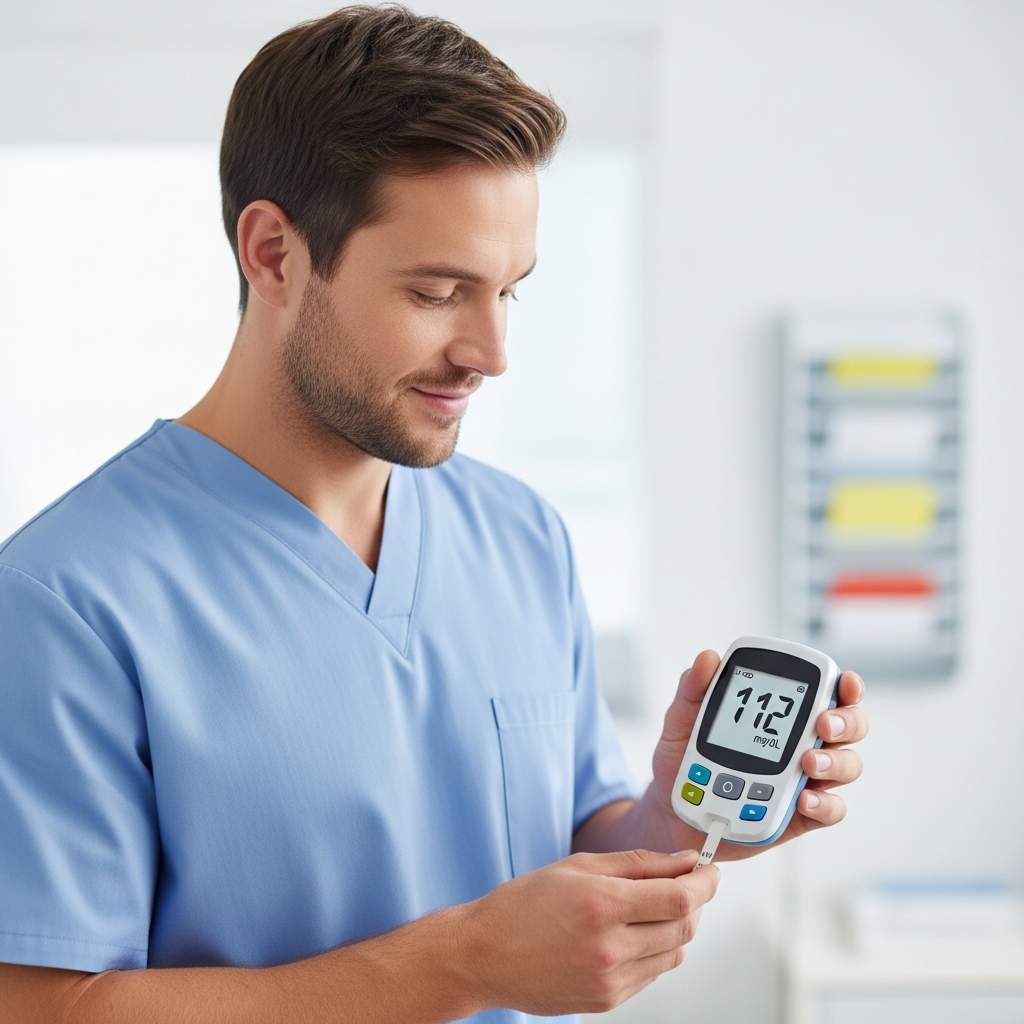
The online OSHA compliant Bloodborne Pathogens: Healthcare Worker certification course provides you with important information about OSHA’s Bloodborne Pathogens Standard and specific training required by those who work in healthcare facilities.
Instant access course
- Begin training immediately after checkout
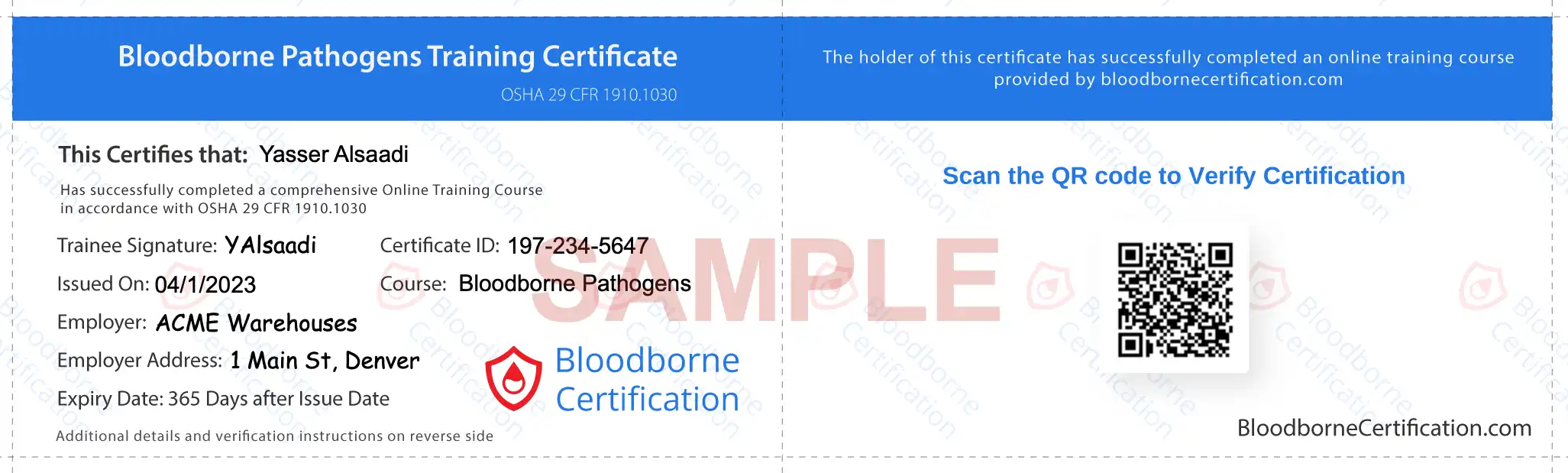
- Instant certificate on completion with QR verification
- 100% acceptance money back guarantee
This course introduces you to the OSHA Bloodborne Pathogens Standard 1910.1030, and the general requirements for employers and employees in the healthcare sector who may potentially be exposed to bloodborne pathogens in the workplace.
The Bloodborne Pathogens Training for Healthcare Facility workers is for any person or healthcare team who comes into contact with human blood and other bodily fluids when doing their job at a healthcare facility or related workplace.
This includes but is not limited to care staff, nurses, medical assistants, Doctors, dentists and dental clinic staff, physicians, janitors and facility cleaners, and many others. This also includes facilities such as care homes and other places where healthcare team training requires bloodborne pathogens coverage.
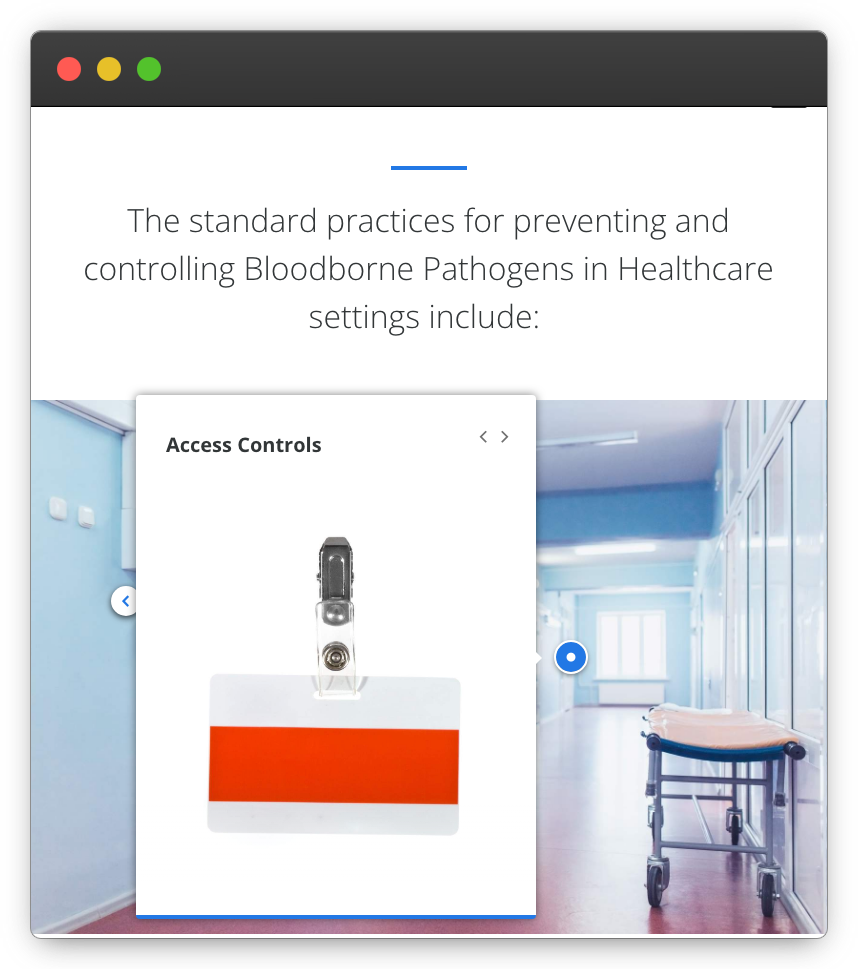
Bloodborne Pathogens Healthcare Course Outline
| Module | Lessons & Course Content |
|---|---|
| Introduction to Bloodborne Pathogens |
Bloodborne Pathogens Introduction: Comprehensive course overview. What are Bloodborne Pathogens?: Types of pathogens commonly encountered in the workplace. Spread and Transmission of BBP: Bodily fluids and primary methods of infection spread. Sharps Injury Statistics*: Analysis of how and why sharps injuries occur. *Additional content not required by OSHA The Bloodborne Pathogens Standard: History, primary goals, and purpose of the OSHA standard. Who is covered by the Bloodborne Pathogens Standard: Identifying personnel and roles under OSHA coverage. |
| Common Bloodborne Pathogens |
Hepatitis B: Transmission, infection risks, symptoms, and vaccination/treatment. Hepatitis C: Transmission, infection risks, symptoms, and treatment options. Comparison Between HBV and HCV: Analysis of risk profiles, prevalence, and treatment differences. HIV: Understanding the virus, transmission methods, and symptoms. |
| Exposure Controls and PPE |
Employer Obligations: Mitigation strategies to control BBP in the workplace. Employers Control Plan: Minimum mandatory requirements for a written Exposure Control Plan (ECP). Bloodborne Pathogens Training: Mandatory OSHA requirements, frequency, and annual retraining rules. Universal Precautions: Definition, importance, and workplace implementation. Work Practice Controls: Behavior-based safety measures and implementation. Engineering Controls: Physical devices and technology used to mitigate risk. Personal Protective Equipment: Selection, standards, use, and employer obligations. Proper Glove Removal: Protocols for correctly donning and doffing nitrile gloves. HBV Immunization: Rights to free vaccination and formal declination protocols. Exposure Incidents and Reporting: Immediate action steps and required post-exposure protocols. Housekeeping: Cleaning, sanitization, and employer maintenance responsibilities. Sharps Injury Logs: Mandated tracking protocols (includes downloadable pro forma log). |
| Bloodborne Pathogens in a Healthcare Setting |
Introduction to Bloodborne Pathogens in Healthcare: Adapting BBP safety standards to clinical environments and patient-facing roles. Risk of Transmission: Identifying high-risk clinical procedures and areas where healthcare workers are most vulnerable to infection. Prevention in Healthcare Settings: Comprehensive safety protocols designed to minimize environmental and procedural exposure risks. Safe Blood Glucose Monitoring: Critical safety steps for using lancets and meters to prevent cross-contamination between patients. Safe Injection Practices: Essential techniques for handling needles and syringes to ensure patient safety and worker protection. Safe Injection Guidelines: A deep dive into the CDC and OSHA-mandated guidelines for the administration of injectable medications. |
| Competency Area | Learning Objectives: “The Student Will Be Able To…” |
|---|---|
| Phase 1: Regulatory Foundations |
|
| Phase 2: Protective Strategies |
|
| Phase 3: Clinical & Legal Rights |
|
| Phase 4: Clinical & Healthcare Applications |
|
Get immediate access to the 2026 OSHA-compliant BBP curriculum. No waiting for manual approval.
Complete the mobile-friendly modules at your own pace between appointments. Your progress is auto-saved.
Pass the exam and download your verifiable, Health Dept. approved certificate with a secure QR code.
3 reviews for OSHA Bloodborne Pathogens: Healthcare Worker
Only logged in customers who have purchased this product may leave a review.
Matt Laurence (verified owner) –
Very informative course, fast access no problems, thanks
Amari Singh (verified owner) –
It was useful and easy to take, the healthcare specific parts were a welcome addition.
Alayna Mack (verified owner) –