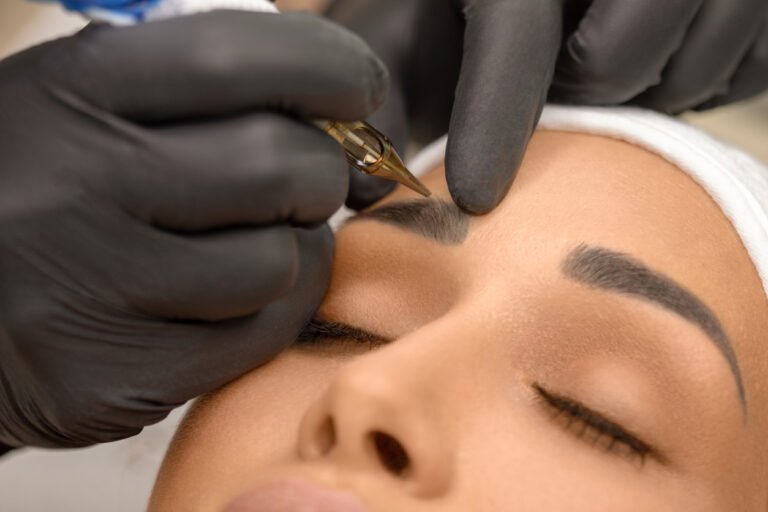
Safety Compliance Guide: Tattoo Studios & Cosmetic Clinics
If you run a tattoo studio or cosmetic clinic, compliance should not only be about passing an inspection.
Inspections DO need to be passed, but it’s also about protecting your clients, your staff, and the reputation of your studio and brand name.
This tattoo and microblading compliance guide keeps the focus on the most important issues for compliance:
- Mandatory training,
- Stopping the Spread of Pathogens
- Biohazard and Sharps Handling
- Sterilization
- Microblading and PMU Specifics.
Mandatory Training
Tattoo Studio Safety Compliance starts with training, not paperwork. As of April 2026, OSHA’s core bloodborne pathogens rules have not changed, so the proven and tested safety basics are still at the core of compliance.
Beyond BBP, many states and counties do require some form of CPR and/or First Aid training. Even if these courses are not required by your state licensing body, why would you NOT train your staff in these potentially life saving skills?
The first question for any artist should not be ‘how do I get a tattoo license?’ it should be ‘How do I operate safely and protect myself, my studio and my clients?’
OSHA Bloodborne Pathogens Standard – the baseline
Any business premises where workers may come into contact with blood or other potentially infectious materials (OPIM) falls under the OSHA bloodborne pathogens rules.
This includes tattooing, microblading, PMU, piercing, and other skin-breaking procedures offered as services.
- If a staff member has exposure risk, train them within 10 days of assignment
- Retrain them every year or when work tasks change – whichever is sooner
- Create and maintain a written exposure control plan
- Keep and maintain training records
- Create studio-specific safety rules and display them in a prominent place
- Offer the Hepatitis B vaccine for exposed employees after initial training. If an employee refuses the vaccine, OSHA requires a specific signed statement. This is a common inspection failure point.
Your team should learn what bloodborne pathogens are, how they spread, and why universal precautions matter. They also need clear instruction on PPE, labeling, cleanup steps, sharps handling, and what to do after an exposure.
Hands-on training should fit the work your team actually does. A tattoo artist, microblading tech, or PMU provider needs examples tied to real station setup, glove changes, splash risks, and tool handling.
If a role carries exposure risk, training isn’t optional, even if that worker has years of experience.
CPR and First Aid training in skin-breaking settings
OSHA does not require CPR and First Aid for every role in every studio, clinic or shop. As mentioned earlier, state or local rules may, but it’s smart risk control for your business.
You may not have experienced the need to provide CPR or First Aid YET, but consider:
Clients can faint, even from relatively short sits if a lot of fill-in work is being done. They can bleed more than expected. Some may react to specific products or just to stress.
When your team knows how to respond while EMS is on the way, you cut panic and reduce harm.
Stopping the Spread of Pathogens
In tattoo and cosmetic settings, contact exposure is the main risk, after all, you are breaking the clients skin on purpose.
That makes small mistakes more serious than they look.
Common contact risks in tattoo studios and cosmetic clinics
Needle sticks and cuts from contaminated sharps are the obvious risks. Blood or OPIM contact with broken skin is another. So are splashes to the eyes, nose, or mouth.
Contaminated tools and dirty surfaces can also spread infection when cleaning or sterilization gets skipped.
OSHA lays this out in the bloodborne pathogens standard and in its guidance for tattoo and body piercing establishments.
High-touch surfaces and small mistakes that create big problems
Cross-contamination often starts with a gloved hand. One touch to a bottle, machine cord, tray, chair arm, light handle, or phone can spread contamination across the room.
An artist touches a “clean” flash book with a contaminated glove to help a walk-in customer. Result: Cross-contamination leads to a Hep B transmission and a devastating lawsuit. Compliance isn’t just about the needle; it’s about every surface in the shop.
Was it worth skipping compliance training?
ALWAYS:
- cover cuts,
- change gloves at the right time, and
- treat every client interaction with universal precautions.
A clean glove becomes a dirty glove the second it touches the wrong surface.
Build a cleaning and disinfecting routine your staff can follow every day
Cleaning removes visible materials. Disinfecting kills germs on a cleaned surface. If your staff mixes those up, your whole routine is shot.
Use EPA-registered hospital-grade disinfectants for bloodborne pathogens. Also consider EPA List N for SARS-CoV-2 or List Q for emerging pathogens if you determine that your studio may be at exposure risk.
What to clean between every client
Reset each station the same way, every single time. Remove used barriers first. Discard gloves and single-use items correctly. Wipe away any visible materials then apply disinfectant and leave the surface wet for the full label time.
This includes chairs, trays, lights, machine surfaces, bottles, counter edges, and any touchpoint used during the procedure.
If the label says a surface must stay wet for two minutes, leave it wet for two minutes!
What your daily and weekly cleaning checklist should include
At opening, check handwashing stations, soap, paper towels, barriers, and PPE stock. At close, clean sinks, floors, shared equipment, and all treatment areas.
Your checklist should also note which disinfectant you used, its contact time, and any internal tracking details you keep, such as the EPA registration number. A routine only works when staff can repeat it without making guesses.
Using Cleaning and Disinfecting Products
Follow the label, especially the wet contact time. Wash hands for 20 seconds, use paper towels, replace barriers, and stick with non-porous work surfaces whenever possible.
Biohazard and Sharps Handling
Hazardous waste mistakes can injure staff, expose janitorial workers, and create inspection problems.
What belongs in sharps containers, red bags, and regular trash
Used needles and other sharps go into puncture-resistant sharps containers right after use. Blood-soaked items usually belong in red bags or regulated waste streams, based on your local and state rules. Ordinary trash is only for items that are not contaminated.
| Waste Type | Correct Disposal | Common Examples |
|---|---|---|
| SHARPS | Puncture-resistant Sharps Container | Tattoo needles, microblades, lancets, glass ampoules. |
| BIOHAZARD | Red Bag (Regulated Waste) | Blood-soaked gauze, saturated cotton buds, used pigment caps with blood. |
| ORDINARY TRASH | Standard Trash Can | Barrier film, machine covers, dental bibs (no blood), glove wrappers. |
Don’t overfill sharps containers. Replace them on a schedule, not when they’re packed tight.
Stopping the ‘Grey Area’ in PMU & Tattoo Waste
A common mistake in tattoo and cosmetic clinics is treating blood-spotted items like ordinary trash. Under OSHA’s Bloodborne Pathogens Standard, waste is “Regulated” (Biohazard) if it is:
- Liquid or semi-liquid blood or OPIM.
- Contaminated items that would release blood if compressed.
- Dried blood that could be flaked off during handling.
The Litmus Test: If you squeeze that cotton bud or microbrush would a drop of fluid come out? If yes, it is Regulated Waste.
How to train staff to avoid disposal mistakes
Keep disposal containers close to the work area. Train staff to drop sharps immediately after use. Don’t let them carry used needles across the room.
Teach them not to recap needles by hand unless a safer method is not available for the particular task. Check fill levels before containers become a hazard.
Sterilization
Sterilization is not the same as cleaning or surface disinfection. If a reusable instrument requires sterilization under the manufacturer’s instructions or your local rules, an autoclave process has to be performed correctly from start to finish.
What an autoclave process should look like from dirty tool to sterile pack
First, pre-clean the instrument. Then dry it, package it correctly, load the autoclave without crowding, and run the correct cycle. After that, store sterile packs so they stay sealed and protected until use.
If packaging gets wet, torn, or damaged, treat that item as non-sterile.
How to verify your sterilization process is really working
Use chemical indicators, routine spore testing, and maintenance logs. Train staff on what each result means and what to do when a test fails.
If a spore test fails, act at once. Pull affected instruments from use, review the load, check the machine, and document the follow-up. Good records protect people and help during inspections.
PRO TIP: Remember the “Indicator Gap.” A Chemical Indicator (the tape or strip) only proves the machine reached a certain temperature. Only a Biological Spore Test proves that the microorganisms (like Hep B or HIV) are actually dead. Most state inspectors require a weekly Spore Test log – don’t let yours lapse.
Daily Sterilization Checklist Pro Forma
| Task | Requirements | Check (✓) |
| Autoclave Load ID | Record Cycle # / Time / Temp | [ ] |
| Chemical Indicator | Did the internal strip change color? | [ ] |
| Spore Test (Weekly) | Date of last Biological Indicator pass: | [ ] |
| Station Reset | EPA Disinfectant applied (Wet Time met?) | [ ] |
| Biohazard Check | Sharps container < 75% full? | [ ] |
| Handwashing Stn | Soap/Paper Towels/PPE restocked? | [ ] |
Additional Considerations for Microblading and PMU Clinics
Microblading and PMU clinics face the same exposure risks because these services also break the skin.
This means your cleaning, glove use, sharps handling, and training standards should match the procedure risk, not the ‘perceived risk’.
What do we mean by this? Someone going to get a tattoo is inherently aware that some risk exists, a person going to get a permanent eyebrow makeup procedure probably does not carry that same risk awareness as they think of it as a ‘beauty salon’ procedure.
Guess what? The eyebrow procedure is ALSO a tattoo and is covered by the exact same rules and regulations.
Legal Fact: A Brow Clinic is a Tattoo Studio in the Eyes of the Law.
If your workers are employees, you provide the exposure plan, training, PPE, and vaccine offer. You also need to check state and local rules, because some areas add licensing, first aid, or room setup requirements for cosmetic services.
🚨 Compliance Note for PMU Artists: Even if your client “barely bled,” any item that touched an open skin procedure is potentially infectious. If your local inspector sees a microbrush with a visible brown/red tint in your regular trash flip-top bin, you will likely fail the inspection on the spot. When in doubt, use the Red Bag.
For full information check the detailed guide Bloodborne Pathogens Certification for Microblading and PMU.
Wrap Up
Good compliance systems do more than satisfy an inspector. They protect everybody, reduce mistakes, and strengthen your business where it counts, trust.
Review your policies now. Retrain staff where habits have slipped, tighten your daily routines, and fix weak spots before your next client sit.