Which Jobs Require a Bloodborne Pathogens Certificate in 2026?
Workplace training and exposure risk
Whether a job requires bloodborne pathogens training depends on the work being performed, not the job title alone. Where an employer reasonably anticipates that an employee may contact blood or other potentially infectious materials (OPIM), OSHA requires appropriate workplace protections, including training.
Healthcare, emergency response, body art, laboratory, and mortuary work commonly involve duties with exposure potential. Other roles—such as childcare, cleaning, education, hospitality, or pharmacy work—may require training when their normal tasks include first aid, blood-spill response, sharps handling, clinical services, or other reasonably anticipated exposure.
Jobs Often Associated With Exposure
Clinical care, emergency response, body art, laboratories, and mortuary work commonly involve tasks that may create occupational exposure.
Jobs That Depend on Duties
A school, restaurant, warehouse, or office role is not automatically covered; the employer must assess the actual tasks and procedures involved.
What a Certificate Shows
A completion certificate documents relevant training. It does not replace an employer’s exposure-control plan or any state and local licensing requirements.
Exposure determination and employer duties
How OSHA Decides Which Jobs Need BBP Training
OSHA’s Bloodborne Pathogens Standard, 29 CFR 1910.1030, applies where an employee has reasonably anticipated occupational exposure to blood or other potentially infectious materials (OPIM). The employer must assess the work being performed rather than relying on a job title alone.
Identify Exposure-Prone Duties
Employers identify job classifications, tasks, and procedures where an employee may reasonably anticipate contact with blood or OPIM through their normal work. This determination is made without assuming that PPE will remove the risk.
Put Controls in Place
Covered employers must maintain an Exposure Control Plan and use appropriate engineering controls, work practices, housekeeping procedures, and task-appropriate PPE to reduce exposure.
Train and Support Employees
Employees with occupational exposure must receive training at initial assignment and at least annually thereafter. Employers must also make Hepatitis B vaccination available, provide confidential post-exposure follow-up, and keep the required records.
Training and Documentation Requirements
OSHA does not prescribe one universal course length or a universal certificate expiry date. Where an employee has occupational exposure, the employer must provide the required training at initial assignment and at least annually thereafter, with additional training when new or modified tasks affect exposure.
Workplace Training
Covered employees must receive training during working hours and at no cost. It should explain the controls, exposure procedures, and workplace-specific information relevant to their duties.
Completion Certificates
A certificate documents completion of a course. Employers must retain their required training records, while state, county, licensing authority, or employer policies may set separate documentation requirements.
Role-Relevant Content
A suitable course should reflect the worker’s environment and likely exposure risks. A clinical, emergency-response, pharmacy, or body-art setting may each need different practical emphasis.
Roles with frequent clinical exposure
Healthcare and Medical Jobs That Commonly Require BBP Training
Healthcare roles frequently involve tasks where contact with blood or other potentially infectious materials may reasonably be anticipated. Employers must assess the actual duties performed, but the following roles commonly require workplace bloodborne pathogens training and related exposure controls.
Doctors and Surgeons
Examinations, invasive procedures, surgery, needles, scalpels, and intravenous lines can create routine exposure potential. Training supports safe handling of sharps, PPE selection, and workplace exposure procedures.
Nurses and Medical Assistants
Blood draws, injections, wound care, specimen handling, and patient treatment commonly involve exposure-prone tasks. Training should support practical controls, safe sharps handling, and incident reporting.
Dentists and Dental Hygienists
Dental care can involve blood, saliva in dental procedures, contaminated instruments, and sharp devices. Staff need workplace-specific infection-control procedures alongside BBP training.
Paramedics, EMTs, and Emergency Responders
Emergency care is often delivered in unpredictable environments where exposure to blood or OPIM may be reasonably anticipated. Rapid care must be supported by safe work practices and clear post-exposure procedures.
Laboratory and Research Staff
Employees who handle blood specimens, cultures, human tissues, or other potentially infectious materials need controls appropriate to the procedures and materials used in their laboratory.
Home Health and Personal Care Workers
Wound care, personal care, waste handling, and work in private homes can create exposure risks outside a traditional clinical environment. Employer procedures must reflect the realities of the setting.
Roles outside traditional clinical care
Non-Healthcare Jobs That May Require BBP Training
Bloodborne pathogens training is not limited to hospitals and clinics. In non-healthcare settings, the key question is whether an employee’s normal duties create reasonably anticipated contact with blood or OPIM. Some roles commonly involve that risk; for others, it depends on designated first-aid, cleaning, waste-handling, or clinical-service duties.
Emergency Response, Law Enforcement, and Corrections
Firefighters, police officers, correctional staff, and other responders may encounter injured people, blood-contaminated evidence, or emergency scenes. Their training should reflect the controls and post-exposure procedures used by their organisation. See our Firefighter and EMS BBP training guide.
Body Art, PMU, and Cosmetic Procedures
Tattoo artists, piercers, permanent makeup practitioners, and microbladers commonly perform skin-penetrating procedures. They need controls for sharps, cross-contamination, cleaning, and any state or local body-art requirements. See our guides for microblading and PMU and body art BBP training.
Pharmacies and Clinical Retail Services
Pharmacy employees may need BBP training when their duties include vaccination, blood glucose testing, injections, clinical services, or handling contaminated materials. Counter, stocking, and administrative duties alone do not necessarily create occupational exposure. Read our pharmacy training guide.
Childcare and Schools
Training may be needed where staff are designated to provide first aid, clean blood spills, or otherwise have reasonably anticipated exposure. This can include school nurses, designated first-aid staff, and childcare providers. See our childcare BBP guide.
Fitness and Recreation Facilities
Fitness facilities are not automatically covered. Training may be needed for designated first-aid responders, lifeguards, or staff expected to clean blood or OPIM, contaminated laundry, or related waste. Personal trainers, coaches, and floor staff should be assessed by their actual assigned duties.
Cleaning, Laundry, Waste, and Facilities Work
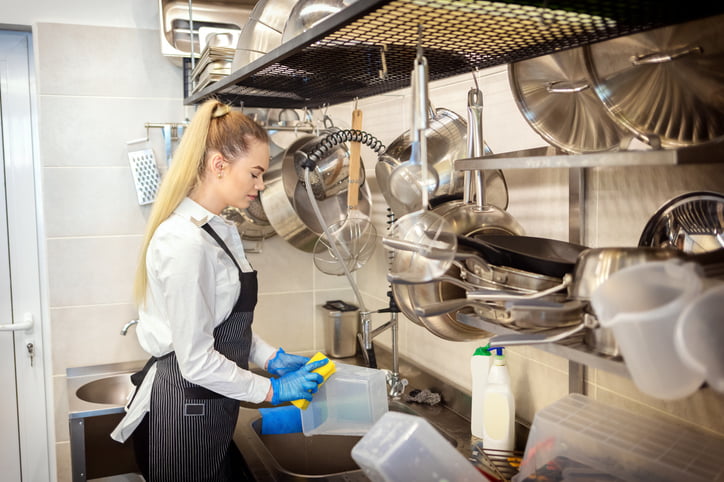
Janitorial, laundry, maintenance, and waste-handling roles may require training where workers handle blood-contaminated materials, regulated waste, contaminated sharps, or spill cleanup. The employer should identify the specific tasks and controls involved. See our janitorial and cleaning guide.
Hospitality, Manufacturing, Warehousing, and Construction
These industries are not automatically covered simply because of their setting. Training may be appropriate where employees are designated to provide first aid, manage blood spills, handle regulated waste, or perform another task with reasonably anticipated exposure. See our hospitality and restaurant guidance.
Mortuary, Forensic, and Research Work
Mortuary staff, forensic personnel, and researchers may handle human tissues, specimens, blood, or other potentially infectious materials. Their training and controls should be tailored to the materials, procedures, equipment, and facilities involved.